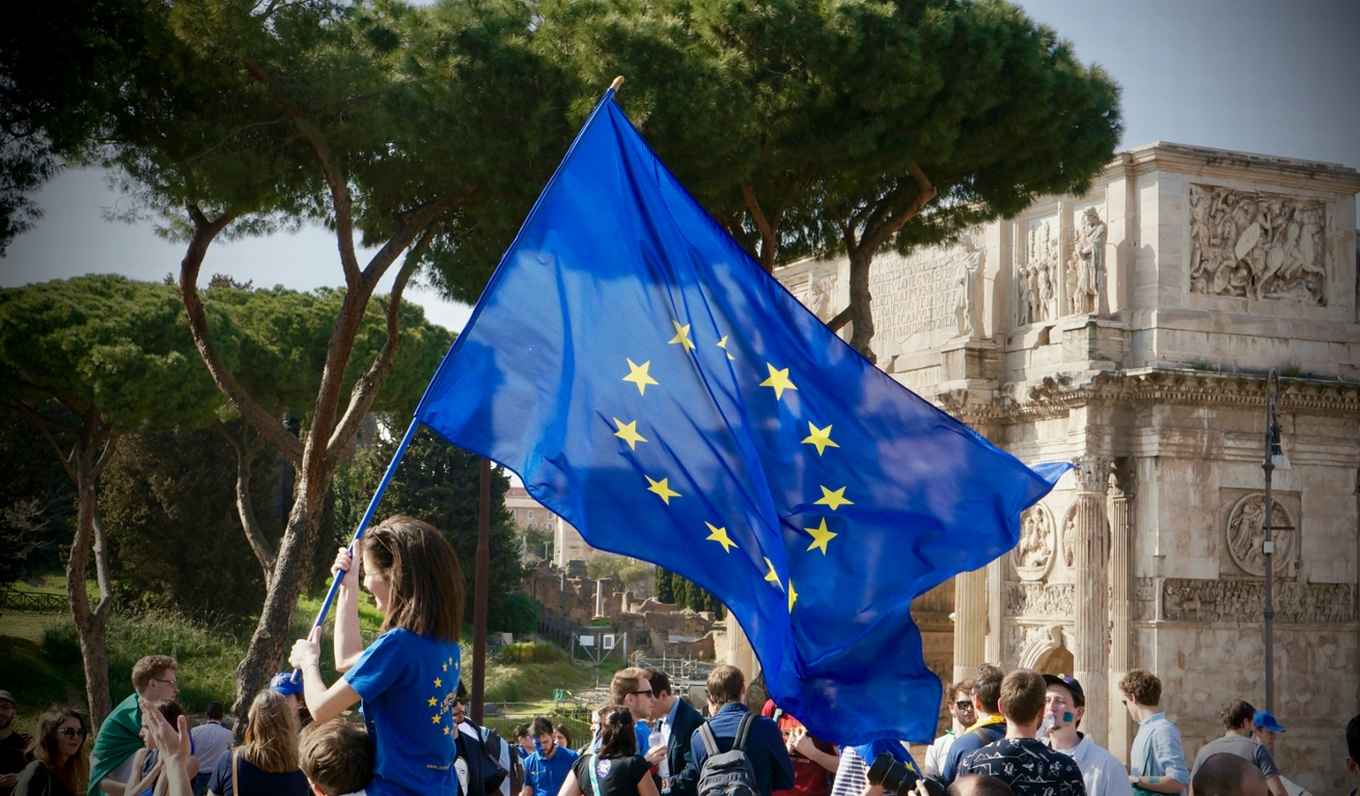
What Has the EU Achieved —and What Comes Next?
ACES Affiliates Reflect on Europe Day
8 May 2026

A New Era of Shared Finance
For Dr. Paul van den Noord, one of the leaders of the ACES Thematic Group “Contested Economic Challenges”, the EU's most meaningful recent breakthrough has been financial. "What strikes me as the most significant achievement in recent years has been the progress made with the issuance of common EU debt," he says, pointing to the €660 billion post-pandemic Recovery and Resilience Facility and the more recent €90 billion military support programme for Ukraine as landmark examples.
But the work is far from done. Dr. van den Noord sees Europe's central challenge as building the institutional backbone to make this kind of cooperation permanent. “The issuance of common debt, underpinned by an enhanced fiscal capacity of the EU to raise taxes or country contributions, must be made a permanent feature of EU economic governance.” Without that, he argues, Europe's ambitions in defence, energy transition, and digital security will remain out of reach.

Standing on Its Own Two Feet
Dr. Claske Vos, Assistant Professor at the Department of European Studies and an affiliate of the ACES Thematic Group "The Future of European Democracy", sees Europe's greatest recent achievement as a shift in mindset: a willingness to act independently on the world stage. "The EU is reconsidering its reliance on the United States and acting more as an independent actor. It has resisted Trump's plans to conquer Greenland and abandon Ukraine and is now taking active steps concerning its plans for defense and nuclear consolidation, tech sovereignty, a capital markets union and a banking union."
Yet Dr. Vos warns that internal divisions threaten to undermine this momentum. "Fragmentation on several levels, on the level of the institutions, the member states and within the different member states, is the biggest challenge. There is a need for much pan-European collaboration instead of competition." She also makes a case that is easy to overlook in times of geopolitical urgency: alongside defense and economic investment, "the EU should also invest in its cultural relations, in 'soft power', to create and secure a stable basis for long-term relations."
The Quiet Power of Good Regulation
Prof. dr. Jonathan Zeitlin, Emeritus Professor of Public Policy and Governance at the University of Amsterdam and ACES Founding Academic Director, makes the case for something that rarely gets the recognition it deserves: the steady and far-reaching development of EU regulation. "The EU's most significant achievement over the past 15 years has been the development of its system of regulation," he argues. The results speak for themselves: far fewer cross-border food safety crises than the US, no fatal air crashes due to regulatory failures, no major bank collapses during the 2023 financial turmoil, and EU excess mortality during COVID-19 that was 36% lower than in the United States.
"Such regulation is a vital component of a 'Europe that protects', but is insufficiently visible and recognised, by citizens and political leaders alike, because its central achievements concern potential disasters that did not happen."
Looking ahead, Prof. dr. Zeitlin is unequivocal about the priority. "The biggest challenge facing Europe today is undoubtedly how to take over responsibility for its own defense in the face of the Russian military threat and the impossibility of relying on the US and NATO security guarantee with Trump in the White House."

Setting the Rules of the Digital World
Dr. Niels ten Oever, Assistant Professor at the Department of European Studies and one of the leaders of the ACES Thematic Group "Tech, Power and Policy", brings a sharper-edged take on Europe's digital ambitions. The win, he argues, is already proven. "European technical standards that have become global norms, such as GSM and UMTS, alongside regulations such as the GDPR, show that single market coordination can shape global technology. When 450 million consumers act together, the world adapts."
But Dr. ten Oever cautions that Europe's current digital sovereignty strategy is missing the point. "In its quest for digital sovereignty, Europe is focusing too much on ownership of infrastructure. Unfortunately, infrastructure ownership does not equal control in a networked environment." Owning the pipes, he argues, does not matter if you are still playing by someone else's rules. His prescription is to invest in open hardware, open software, protocol interoperability, and browser diversity, and to embed European values directly into technological architecture through standards and public procurement.
Values, Democracy, and the Bigger Picture
Dr. Krisztina Lajosi-Moore, Senior Lecturer and Research Coordinator in the Department of European Studies and an affiliate of the ACES Thematic Group "Europe in the World", takes a step back to highlight what makes the EU distinctive in the first place. "The EU stands out as the only major global power that consistently places human rights, democracy, and Big Tech regulation at the core of its political agenda. Its response to Russia's war against Ukraine further demonstrated Europe's capacity to act decisively and its recognition that geopolitical security requires a coordinated and unified strategy."
The challenges she identifies are wide-ranging but deeply interconnected. "Europe's biggest challenges today include combating disinformation, responding to growing military and geopolitical threats, securing sustainable economic growth, and addressing the accelerating climate crisis." For the decade ahead, Dr. Lajosi-Moore calls for a Europe that is both stronger and truer to itself. "Europe must focus on becoming stronger, more resilient, and more united: reinforcing democratic institutions, expanding strategic autonomy, investing in defense and security, and protecting the rule of law."
One Union
Five researchers, five perspectives and a collective reminder that the European project, for all its complexity, remains one of the most ambitious and inspiring political experiments in modern history.
But there is certainly plenty to celebrate. Happy Europe Day!