Crisis Today, More or Less Europe Tomorrow?
14 January 2026
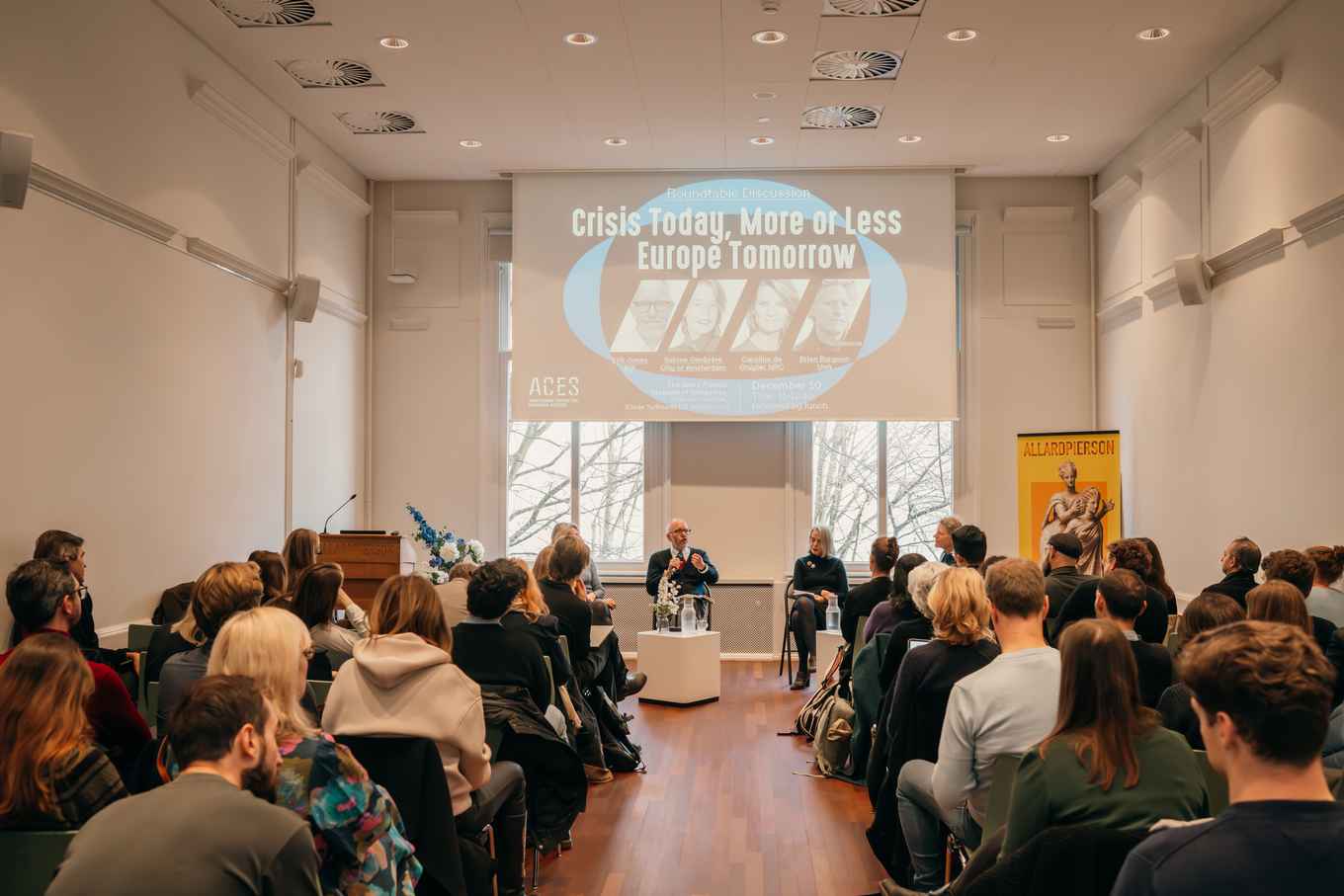
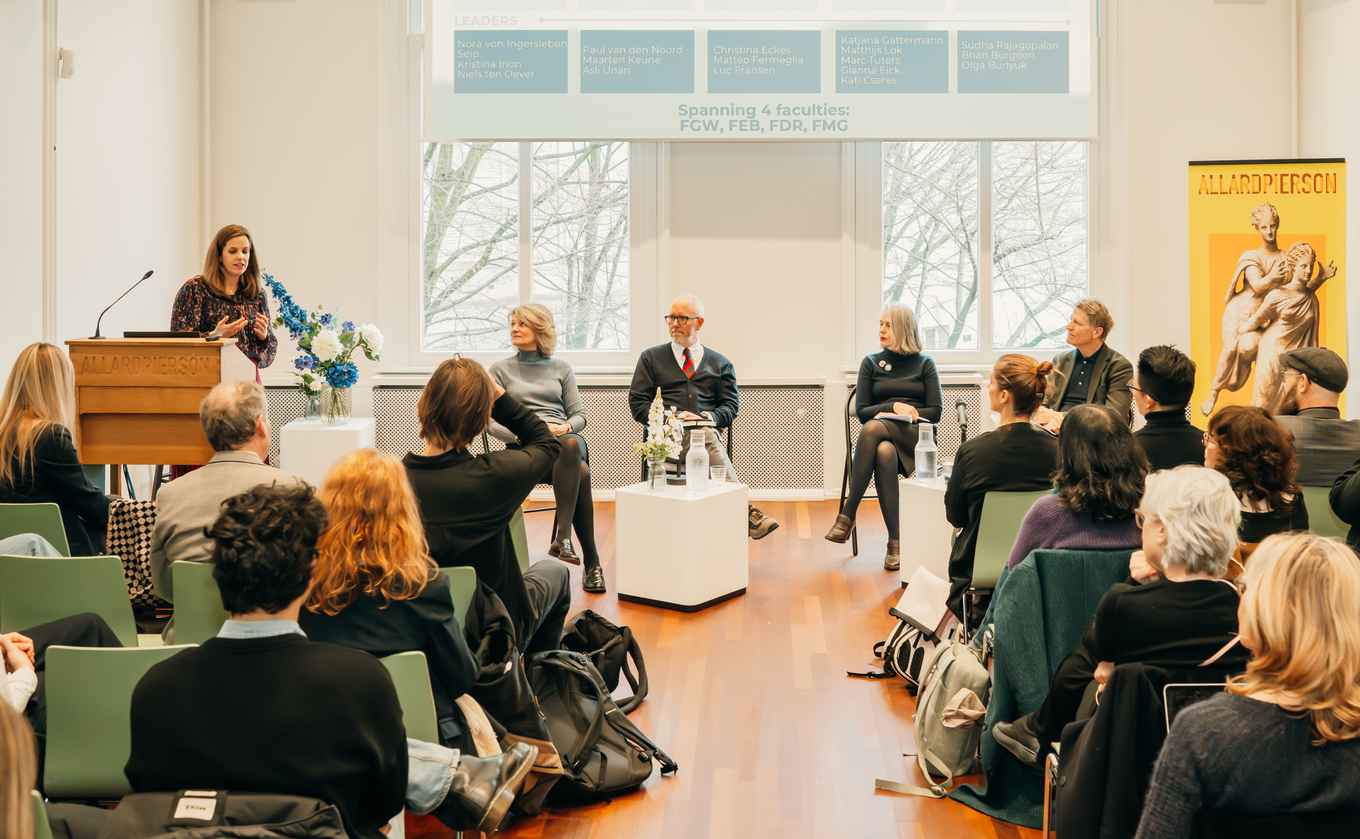
Russia’s ongoing war against Ukraine, shifting political priorities in the United States, the rise of far-right movements across the continent, the accelerating effects of climate change, and the rapid development of artificial intelligence. Together, these forces are testing Europe’s political, economic, and security foundations. At the heart of the discussion lay a fundamental question: do crises push Europeans closer together, or do they reinforce national divisions?
Crisis as a catalyst for unity
For Caroline de Gruyter, Europe correspondent and columnist for NRC, today’s crises expose both the limits of national sovereignty and the practical necessity of European cooperation.
“Even Germany doesn’t stand a chance on its own,” she argued. “So they must do it together.”
De Gruyter noted that this reality is increasingly recognised even by political actors who once championed withdrawal from the European project. Far-right parties that previously celebrated Brexit and flirted with exits from the EU or the eurozone have largely fallen silent on the issue.
“They loved Brexit. They were talking about Nexit, Frexit, leaving the eurozone,” she said. “And now they’ve stopped talking about it, because they saw what happened after Brexit. It was a real disaster.”
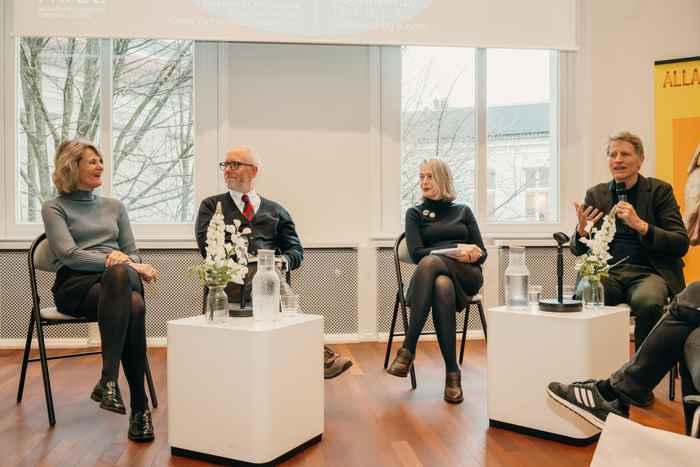
According to de Gruyter, even figures such as Marine Le Pen and Geert Wilders have quietly abandoned explicit exit rhetoric, even if the underlying scepticism remains. She pointed to Hungarian Prime Minister Viktor Orbán as a particularly revealing example of this contradiction. Despite his constant attacks on Brussels, Orbán has no intention of leaving the EU.
Taken together, these dynamics, de Gruyter suggested, illustrate a broader trend: even Europe’s most vocal critics increasingly recognise that power today lies inside the Union, not outside it.
“Yes, the risks and dangers are formidable,” she concluded. “But it is increasingly clear what the answer is: to stick together.”
Security as a disappearing resource
Erik Jones, Director of the Robert Schuman Centre for Advanced Studies at the European University Institute, framed Europe’s predicament in stark terms.
“The good news is that, in a world of crises, as an academic I get to write a lot,” he remarked. “The bad news is that I also have to live in that world.”
Jones warned that the next phase of European integration will be far more intrusive and demanding than many citizens expect.
“This Europe is going to be much more intrusive than you ever thought. It will be constraining and uncomfortable, and it will force you to work with people you don’t know, and we don’t like people we don’t know.”
To explain why such cooperation is unavoidable, Jones used the metaphor of a village confronted with the loss of vital resources. “If water disappears or the forest starts dying, you get together, you make rules, and you govern yourselves so that no one cheats. That’s how life works.”
According to Jones, European security is precisely such a disappearing resource. He pointed to vulnerabilities ranging from undersea cables and drone incursions to the weaponisation of migration, digital surveillance, social media interference, and the war in Ukraine, which has displaced millions of people now living across Europe.
“Our security is disappearing, and we don’t have a choice. We have to work with everyone who can help us be more secure.” Rejecting the idea that security can be outsourced, Jones said:
“Security is not a public good that will be provided by some third party, like the United States, where everyone benefits and no one pays. We have to provide that good ourselves. It will be hard, but there is no alternative to collective action.”
Cities on the front line
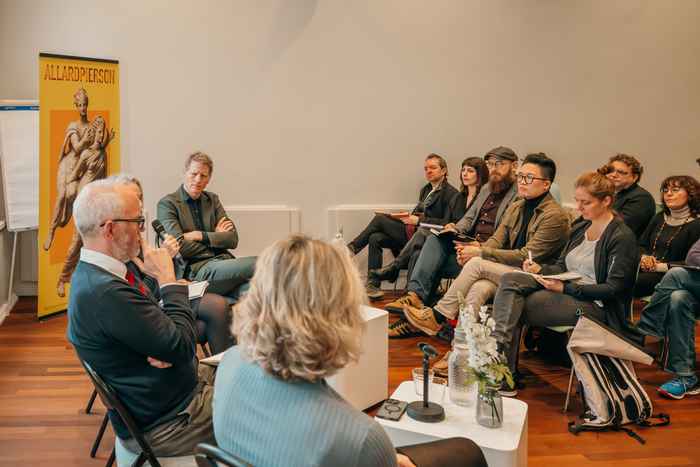
While much of the discussion focused on geopolitics and European institutions, Sabine Gimbrère, Director of the International Office of the City of Amsterdam, shifted attention to the local level.
“I won’t argue that cities are key stakeholders in international security,” she said, “but I will argue that we are indispensable stakeholders in many issues, particularly when it comes to keeping our societies liveable.”
Gimbrère stressed that international crises are felt immediately in cities. Since Russia’s invasion of Ukraine, Europe has become far more prominent in national policymaking. At the same time, conflicts elsewhere resonate strongly at the municipal level. “When the war in Gaza broke out, we felt it instantly. Amsterdam is a city of freedom of expression, and this year alone we have had over 3,000 demonstrations, many related to international conflicts.”
Beyond geopolitics, she highlighted the indispensable role of cities in defending democratic values as illiberal trends emerge in parts of Europe. As she explained, in several countries, national governments are moving in illiberal directions. Mayors increasingly feel the need to step up and protect what we see as the core values of Europe.
More Europe - necessity
The discussion was moderated by Brian Burgoon, Professor of Political Economy at the University of Amsterdam and ACES Academic Co-Director, who guided the exchange across institutional, national, and local perspectives.
While the speakers approached Europe’s crises from different angles, a shared conclusion emerged: these challenges are not abstract, but shape security, democracy, and everyday life across the continent. Whether they lead to more or less Europe remains a political choice, yet the costs of fragmentation are increasingly clear.
As ACES’ End-of-Year Event showed, Europe’s future will depend on how Europeans choose to respond: together or apart.