East Asia, South-East Asia, South Asia and West Asia (the Middle East) in Pan-European Thought, ca. 1900–1980
Call for Papers
17 August 2026
The end of European imperialism
In the historical “grand narratives” about the early European integration process, the start of this (Western) European integration process is often portrayed, if not as a “virgin birth”, then at least as the “soft landing” of West European countries following the end of European imperialism. This picture of European integration as a “postcolonial” phenomenon is incomplete rather than incorrect. Over the past decades, it has become widely recognised that the European integration project has its origins, in part, in the efforts to perpetuate Western European modern imperialism. The groundbreaking work of, for example, Karis Muller, Thérèse Bitsch & Gérard Bossuat and others in the 2000s was followed in 2014 by an influential monograph titled Eurafrica: The Untold History of European Integration and Colonialism by Peo Hansen & Stefan Jonsson. The impact of Hansen & Jonsson’s study has been described as a “Milwardian” shift in perspectives on the history of European integration, which has fundamentally revised scholars’ understanding of the early European project. Much like Alan Milward’s work on early European integration as a “rescue” of the West European nation state had done for an earlier generation of scholars, the Eurafrican lens has challenged and reshaped interpretations of the origins of the European project. The missing colonial dimensions have become visible. However, thus far, most of this research focuses on the rather well-known case of “Eurafrique”. In doing so, the international discussion on decolonisation and European integration processes is almost exclusively based on the French, and to a lesser extent Belgian, aim of stemming the tide of decolonisation by including imperialist concepts in plans for European integration.
Broaden the current discussions on the intertwined histories of decolonisation
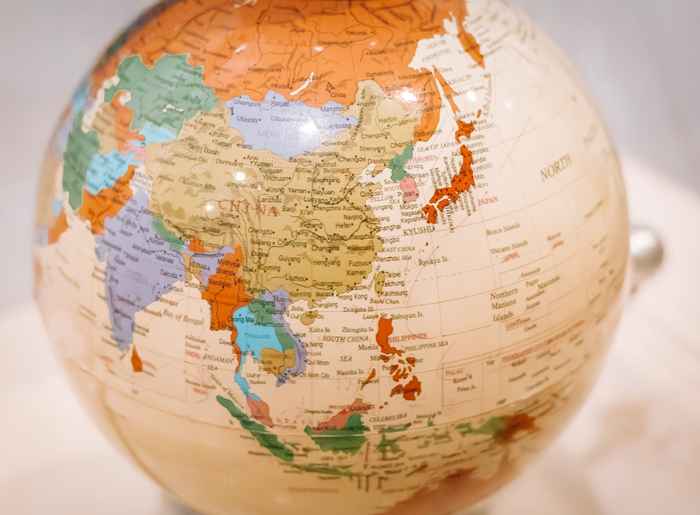
The aim of the conference “East Asia, South-East Asia, South Asia and West Asia (the Middle East) in Pan-European Thought, ca. 1900-1980” is to broaden the current discussions on the intertwined histories of decolonisation and pan-European thought, moving beyond the focus on the European Communities and Eurafrica. In particular, we wish to examine how a growing desire for autonomy in East Asia, Southeast Asia, South Asia and West Asia shaped pan-European thinking and ideas about the European order - including the Nazis “New Order” - between approximately 1900 and 1980. We are particularly interested in the implications for pan-Europeanism of
- the interplay between nationalism and communism in Asia,
- the fear of a “yellow peril”,
- transnational pan-movements such as pan-Islamism,
- the global significance of Afro-Asian solidarity,
- “European” institutions and the legacy of imperial structures
In this context, “Europe” is not limited to the European Communities, but also encompasses Coudenhove-Kalergi’s Paneuropa Union, the Nazis’ New Order, and organisations such as the League of Nations, the United Nations and the OEEC/OECD. Another fascinating angle might be the stance taken by the East, South-East and South Asian Commonwealth countries regarding the United Kingdom’s attempts in the 1960s to join the European Communities.
Europe as one node in a global network of confluences
We welcome paper proposals that are transnational and that consider Europe as one node in a global network of confluences. Examples of paper topics include, for example, Coudenhove-Kalergi’s Pan-Europa Union, fascist and National Socialist ideas about unity in Europe and overseas imperialism, the postwar Marshall Plan and Indonesian independence, and the Council of Europe’s Convention on Human Rights.
Submission details
Please submit an abstract (max. 300 words) and a short bio no later than Monday 21 September 2026 to n.kurnaz@uva.nl with the title ‘Submission for CfP Pan-European Thought’. The selection committee will notify applicants of the outcome of their submission before 12 October 2026.
The organisers – Nuri Kurnaz MA and Dr. Robin de Bruin – are considering submitting the conference proceedings as an edited volume to a reputable publisher.
For junior researchers without their own research budget, a contribution towards travel and accommodation costs may be available. Please indicate in your proposal if you wish to make use of this.